
The promise of nuclear energy has always been enormous — near-limitless, carbon-free baseload power humming away day and night. But the reality of nuclear energy cost has proven equally enormous, and rarely in a good way. From billion-dollar construction overruns to century-long waste storage obligations, the true price of splitting the atom stretches far beyond what any utility brochure will tell you — and it’s reshaping the conversation about where clean, reliable energy must go next.
The Price Tag Nobody Warned You About
When nuclear power first emerged in the mid-twentieth century, it was famously promised to be “too cheap to meter.” That vision has aged poorly. Today, the U.S. Energy Information Administration estimates the levelized cost of electricity (LCOE) for advanced nuclear power at $110 per megawatt-hour (MWh) — compared to approximately $55/MWh for utility-scale solar PV and $40/MWh for onshore wind. Those aren’t minor differences. They represent a structural cost gap that the nuclear industry has spent decades struggling to close, with limited success in Western markets.
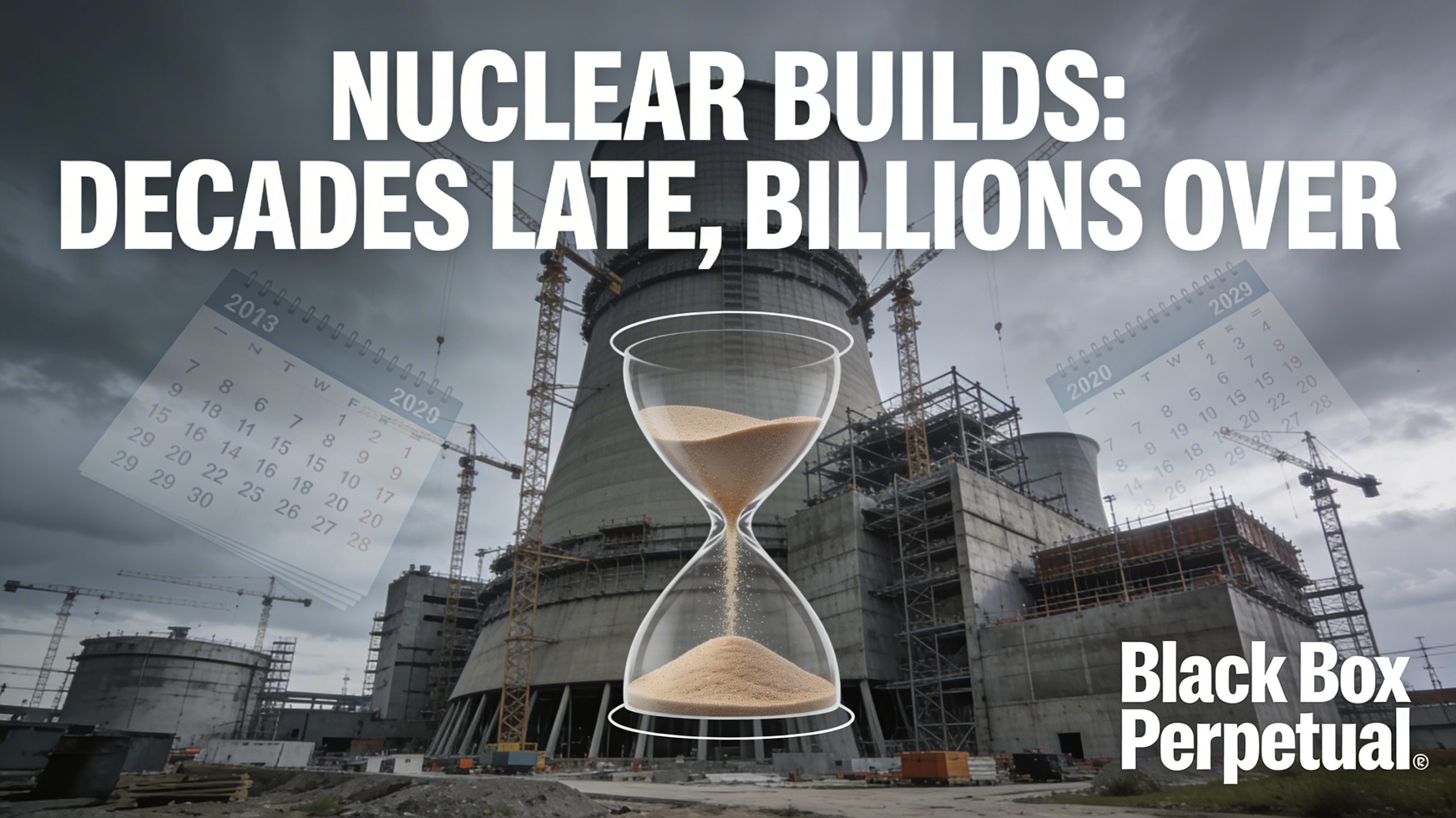
The sticker shock doesn’t end at power generation. New nuclear construction in the United States has effectively ground to a halt, with nearly all existing U.S. nuclear plants built before 1990, and since 2000, over 30 plans for new U.S. reactors have been canceled while only three have been completed. The reason is straightforward: the industry has failed to demonstrate it can control costs, and financiers have largely walked away.
Must See Also: Are nuclear power plants too expensive to build? | MIT Climate Portal
Vogtle: A $35 Billion Cautionary Tale
No story better illustrates the nuclear energy cost crisis than Georgia Power’s Plant Vogtle Units 3 and 4. Originally sold to regulators and the public with a price tag of $14 billion, the final cost surged past $35 billion by the time Unit 4 entered commercial operation in April 2024 — making it the most expensive power plant ever constructed on Earth. That $21 billion overrun dwarfs the budgets of entire national infrastructure programs.
The human cost is just as sobering. Georgia Power customers may see an increase of as much as 10% on their energy bills to help cover the plant’s costs, with some analyses suggesting bills could rise 20% for 60 years if all construction costs move into the rate base. For a state already in the top 10 for high power bills and energy poverty, this is not an abstraction — it is a crisis landing on working families’ kitchen tables. Westinghouse, the primary contractor, went bankrupt in 2017 under the weight of the cost overruns, underscoring how deeply systemic the problem runs.
Must See Also: Anatomy of a mess: the cautionary tale of the US’s last mega nuclear reactor | Energy Transition
Construction Cost Overruns Are the Rule, Not the Exception
Vogtle is not an anomaly — it is the industry norm. A landmark study from the Boston University Institute for Global Sustainability found that the average nuclear power plant has a construction cost overrun of 102.5%, ending up costing on average $1.56 billion more than expected. No other energy infrastructure sector comes close to this level of chronic budget failure.
The reasons are deep and structural. MIT researchers found that the productivity of the construction sector in the U.S. has been declining since the 1960s, and nuclear plants — which are extraordinarily complex — have been especially hard-hit. The two Vogtle reactors that finally came online cost around $15,000 for every kilowatt of generating capacity, compared to less than $2,000 per kilowatt (adjusted for inflation) for plants built in the 1970s. That tenfold increase in cost per unit of capacity is not a glitch — it reflects decades of regulatory complexity, supply chain fragility, workforce skill erosion, and first-of-a-kind design risks.
Must See Also: Investment Risk for Energy Infrastructure Construction Is Highest for Nuclear Power Plants | Boston University
The Hidden Costs: Waste, Decommissioning, and the Century-Long Bill
The reactor construction costs are only the beginning. Once a nuclear plant stops generating power, the financial obligations stretch across generations. Decommissioning costs for a typical U.S. nuclear reactor generally range from $300 million to $400 million, according to the Nuclear Regulatory Commission. But that figure can balloon dramatically: an OECD Nuclear Energy Agency survey found U.S. reactor decommissioning costs ranging from $544 million to $821 million per unit for larger plants.
Spent nuclear fuel adds an entirely separate layer of perpetual cost. Because the United States still has no permanent repository for high-level radioactive waste, spent fuel sits in temporary storage at reactor sites — a situation that ratepayers continue to fund for decades after a plant closes. Germany’s utilities estimated their combined decommissioning bill at 34 billion euros, with costs potentially rising to 31–67 billion euros when long-term waste storage obligations are fully accounted for — and some of those obligations run to 2099 and beyond. The nuclear energy cost, in other words, is not a 40-year proposition. It is an intergenerational one.
Must See Also: Decommissioning costs: A blind spot in the nuclear power debate | Utility Dive

Small Modular Reactors: A Promising Fix or the Same Old Story?
The nuclear industry’s answer to the mega-project cost problem has increasingly been the small modular reactor (SMR) — factory-built, standardized units designed to reduce first-of-a-kind risk and enable economies of scale through repetition. SMRs need to hit competitive LCOE targets ranging from approximately €52/MWh to €119/MWh to become viable against other baseload energy sources. In principle, this is achievable with sufficient volume.
The early track record, however, is not encouraging. NuScale, the company that was supposed to launch the first commercial SMR in the United States, saw estimated costs jump from $5.3 billion to $9.3 billion — a 75% increase — before the project was cancelled. Experts note that the real breakthrough for SMRs requires “next-of-a-kind” rather than first-of-a-kind plants, needing standardized designs reaching production volumes of at least 30 to 50 units to fully capture modular manufacturing cost savings. That milestone is still years away — and there is no guarantee the industry can execute at scale after repeated failures to control costs.
Must See Also: Nuclear power could solve US electricity needs. But at what cost? | WRKF

When Existing Plants Are the Best Deal — and Still Not Enough
To be fair to nuclear, the picture is not uniformly grim. The average total generating cost for existing U.S. nuclear plants in 2023 was $31.76 per megawatt-hour — significantly below the cost of new nuclear construction — and that figure has fallen nearly 40% since 2012, largely through fuel cost reductions and efficiency improvements. Extending the life of existing nuclear plants is broadly considered the most cost-effective form of low-carbon baseload electricity currently available in the United States.
But this solution is self-limiting. Existing plants are aging, and the United States has the largest fleet of nuclear power plants in the world, nearly all built before 1990. Running these assets efficiently buys time — it does not build a foundation for the future. The moment a utility needs to replace retiring capacity with new nuclear, it faces the same brutal cost reality that has derailed every major project in recent memory. The gap between operating old plants cheaply and building new ones affordably has never been wider.
Must See Also: Economics of Nuclear Power | World Nuclear Association
A New Path: Continuous, Clean Power Without the Nuclear Price Tag
The fundamental appeal of nuclear power is real: it offers always-on, carbon-free electricity that doesn’t depend on sun or wind. But the nuclear energy cost structure — ballooning construction budgets, multi-decade waste obligations, generational ratepayer burdens, and frequent contractor bankruptcies — makes nuclear a profoundly difficult solution to scale in the 21st century.
This is precisely where Black Box Perpetual (BBP) enters the conversation. BBP is currently evaluating partners for a pilot program offering a power generation system that delivers continuous, clean energy — containerized in a standard 20-foot unit — at 50% reduced cost compared to current energy expenses. Unlike nuclear, which demands billion-dollar upfront capital commitments, regulatory gauntlets, and construction timelines measured in decades, the BBP system is designed for rapid, scalable deployment.
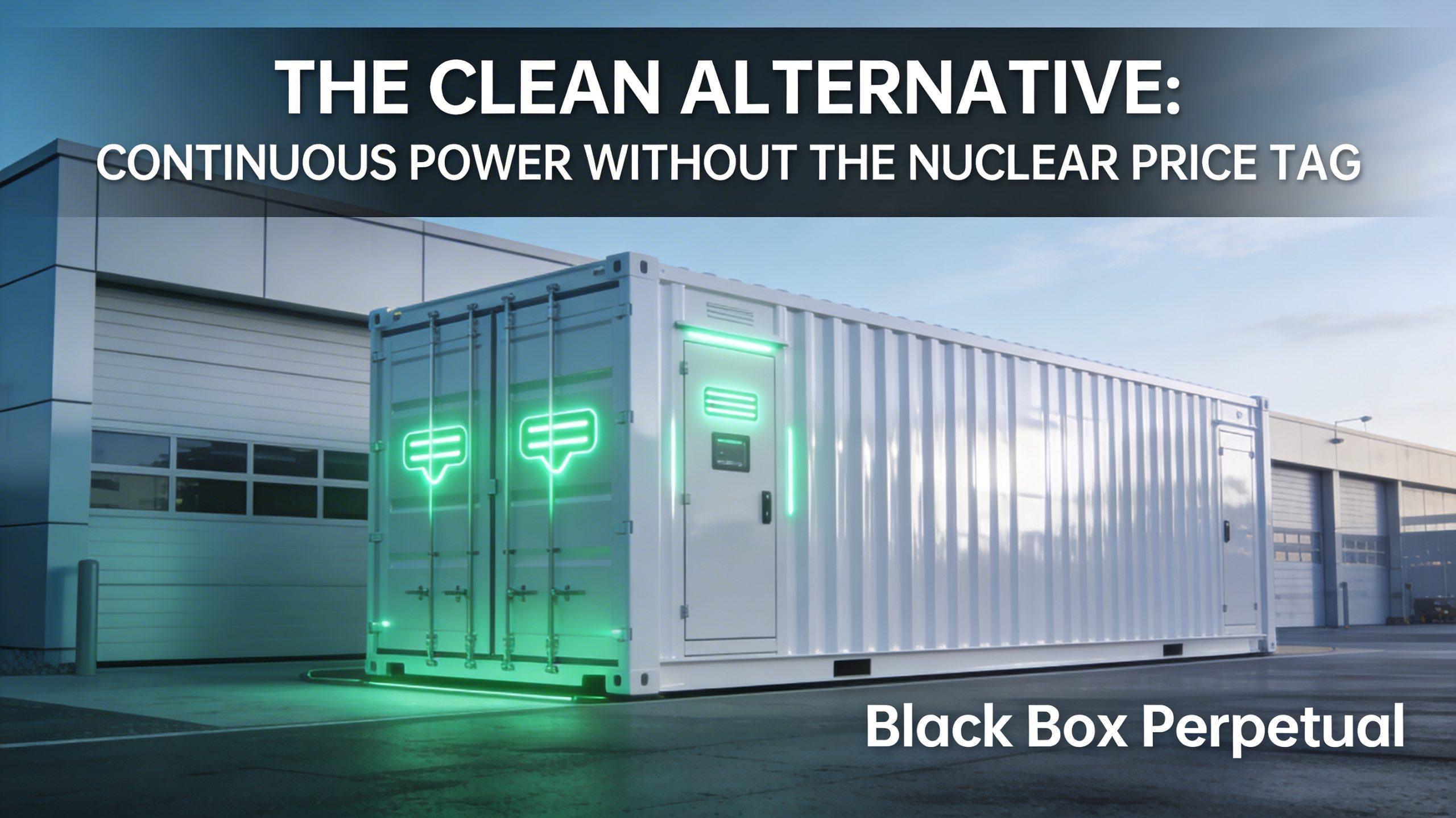
Selected pilot partners receive and install the 1MW system at their site and use the generated power for free for six months, after which they may enter a 25-year power purchase agreement for a 10MW+ system — delivering greatly reduced pricing compared to current energy costs. Full-rate production and earliest delivery is targeted for June 2027, with deployment scalable to multi-gigawatt levels. For large enterprises staring down decades of nuclear-inflated electricity bills, that proposition is worth a serious look.
Must See Also: Black Box Perpetual — 50% Reduced Cost, 24/7 Power