
Nuclear power has long been offered as a reliable, carbon-free energy source capable of powering civilization indefinitely, but an honest examination of construction costs, time overruns, radioactive waste disposal, ratepayer liabilities, and accident risk reveals an energy source so expensive and financially unpredictable that it has become a cautionary tale — and why the clean, continuously operating Black Box Perpetual system deserves serious attention as a genuinely cost-effective alternative.
Nuclear’s Cost Problem Is Not New — It’s Getting Worse
The story of nuclear power economics in the United States is a story of steadily and dramatically rising costs. Commercial plants whose construction began in the late 1960s cost $1,000 per kilowatt or less (in 2010 dollars); plants started just 10 years later cost nine times that much. The latest generation of U.S. reactors — Units 3 and 4 at Georgia’s Plant Vogtle — came in at approximately $10,784 per kilowatt, nearly ten times the cost of a modern natural gas plant. This isn’t a one-time aberration. It reflects deep structural challenges in nuclear construction that have defied every attempt at reform for more than half a century.

Nuclear’s cost escalation is a global phenomenon. A study from the Boston University Institute for Global Sustainability found that the average nuclear power plant has a construction cost overrun of 102.5% and ends up costing $1.56 billion more than expected. Nuclear projects are the worst offenders among all energy infrastructure categories, with average construction cost overruns typically twice as much as expected or more, and the most extreme time delays. The pattern is so consistent that economists have a name for it: nuclear’s “negative learning curve” — unlike most industries where costs fall with experience, nuclear costs rise.
Must See Also: Nuclear power plants cost more and more
Plant Vogtle: $35 Billion and a Cautionary Tale for the World
No case study better illustrates nuclear’s cost problem than Plant Vogtle Units 3 and 4 in Waynesboro, Georgia — the only new nuclear reactors built in the United States in over 30 years, and the most expensive power plant ever constructed on Earth. Originally sold to regulators and the public with a price tag of $14 billion, the final cost of the project surged past $35 billion by the time Unit 4 entered commercial operation in April 2024. This $21 billion overrun represents a 150% cost increase over the original estimate.
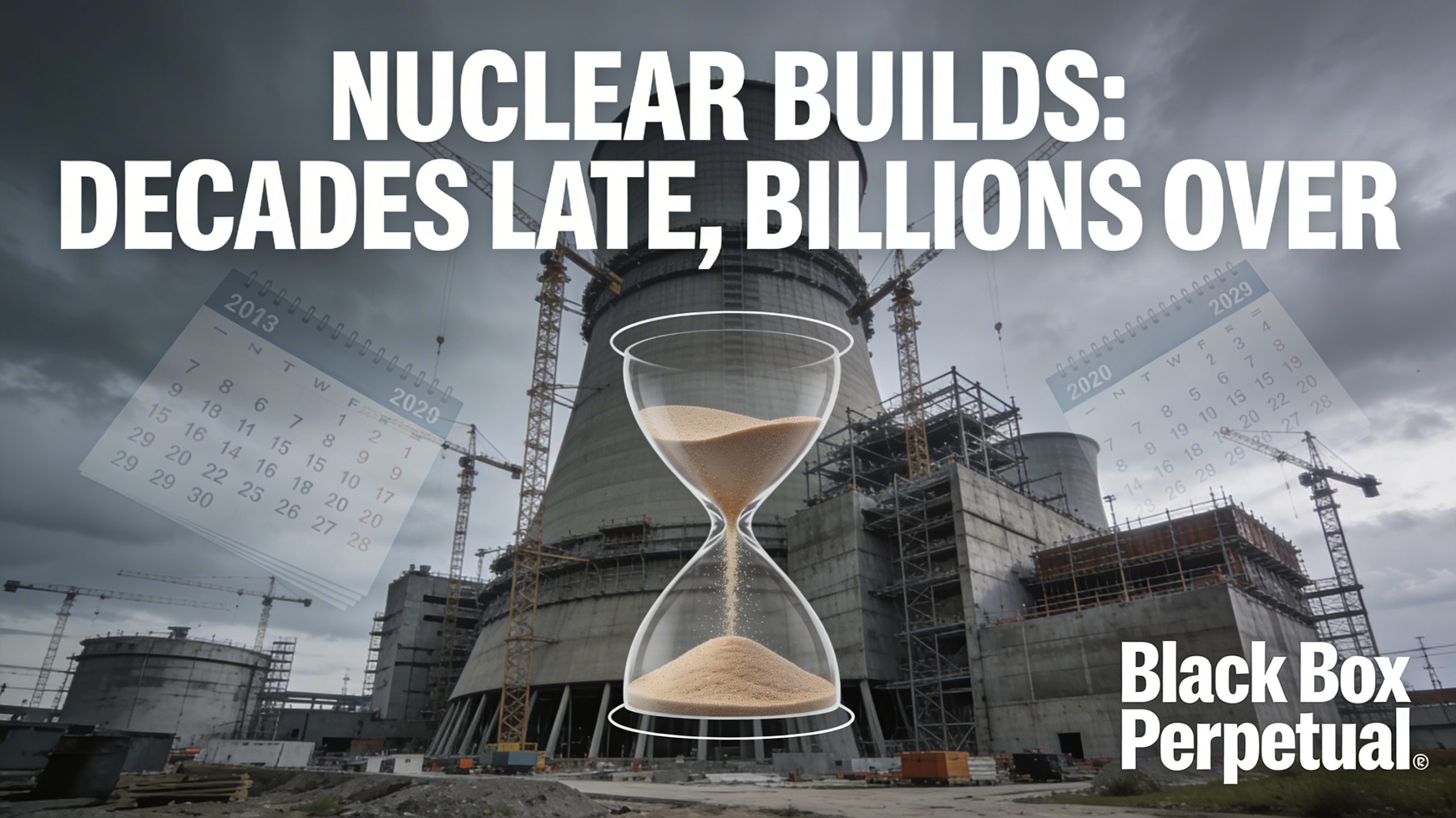
The schedule failure was equally stunning. Unit 3 completion was originally planned for 2016 but arrived in July 2023 — seven years late. Unit 4 was planned for 2017 but was not completed until April 2024. The delays drove Westinghouse Electric Co., a titan of American industrial history, into bankruptcy when the company couldn’t absorb overruns. Georgia Power customers responded with massive electricity bill increases — the utility received multiple rate hike approvals, with Georgia Power ratepayers responsible for a $7.6 billion bill for the construction of two nuclear reactors.
Must See Also: Nuclear Power Revival: The 35 Billion Dollar Vogtle Cost Overrun
The Construction Timeline Problem: A Decade Before Any Power
Even if cost overruns could somehow be controlled, nuclear power’s construction timelines create a fundamental problem for any organization or nation trying to address energy needs within a practical timeframe. The median time to build a nuclear reactor globally was 6.3 years, with a mean of 7.5 years. In the United States, regulatory complexity, labor shortages, and safety requirements push that timeline significantly higher. Recent construction times exhibit wide variability and averaged 9.4 years from 2013 to 2022.

The Hinkley Point C project in the United Kingdom offers a sobering contemporary example. Construction started in 2018 and 2019 with projected completion in 2027 and 2028, giving construction times of 110 to 120 months — several years later than originally planned. As of March 2026, the estimated completion cost has ballooned to £35 billion in 2015 prices, nearly double the original £18 billion budget authorized when the project was greenlit in 2016. When adjusted for inflation, the actual capital expenditure is projected to exceed £48 billion. Time is money in any industry — in nuclear, that relationship is catastrophic.
Must See Also: How long does it take to build a nuclear reactor?
Ratepayer Burden: Who Really Pays for Nuclear Overruns
When nuclear projects run over budget — and they almost always do — the costs don’t disappear. They are systematically transferred to the ratepayers: the homeowners, businesses, and institutions that pay monthly electricity bills. Advanced cost recovery laws in some states allow utilities to begin collecting from ratepayers years before a plant is even complete, shifting the financial risk entirely from investors to consumers. Utilities had a huge incentive to construct reactors that would dramatically expand their rate base with full, guaranteed return on investment and virtually no risk to stockholders.
The total historical bill is staggering. The total cost to ratepayers, taxpayers, and shareholders stemming from cost overruns, canceled plants, and stranded costs exceeded $300 billion in today’s dollars, according to the Union of Concerned Scientists. That figure does not even include the ongoing and future costs of waste disposal and decommissioning — costs that will accumulate for generations. The revenue requirements due to Vogtle 3 and 4 will be in excess of $70 billion over the units’ expected operating lives, according to commission staff calculations.
Must See Also: Anatomy of a mess: the cautionary tale of the US’s last mega nuclear reactor
The Waste Problem: Costs That Persist for Thousands of Years
Unlike any other energy source, nuclear power generates radioactive waste that remains hazardous for tens of thousands of years — and for which no permanent disposal solution currently exists in the United States. The costs of decommissioning nuclear plants and managing their waste are enormous and almost invariably underestimated. For pressurized water reactors in Europe, total decommissioning costs range between 320 and 1,500 million euros per unit. In Germany alone, utilities estimated the total cost of decommissioning at 34 billion euros — and experts warn that figure does not include the considerable risk of cost increases during the search for a permanent repository.
The United States has approximately two-thirds of its estimated decommissioning fund already collected, but still faces a remaining liability of about $9 billion to be covered over the remaining operating lives of about 100 reactors. That liability will be passed to ratepayers through ongoing utility charges. And the deeper problem — where to permanently store high-level nuclear waste — remains an unresolved technical, political, and financial challenge that has cost the U.S. billions of dollars without producing a solution. The promise of cheap nuclear power never included an honest accounting for the back end.
Must See Also: Decommissioning Nuclear Facilities

Why Nuclear Costs Keep Rising: The Negative Learning Curve
In almost every other major industry — from solar panels to computer chips to automobiles — costs decline as experience accumulates, supply chains mature, and manufacturing techniques improve. Nuclear power is a striking exception. Approximately 72% of the cost increase in nuclear construction was due to indirect costs, indicating a large increase in expensive professionals such as engineers and managers. Increasingly strict quality assurance requirements have created a market dynamic where nuclear-grade components were in some cases 50 times more expensive than off-the-shelf industrial grade ones.
Because the U.S. went decades without building new nuclear plants, the pool of potential nuclear component suppliers was severely limited, making it harder to obtain components and further increasing their price. The nuclear industry’s supply chain has atrophied to the point where attempting to revive it means paying extraordinary premiums for scarce specialized labor and components. The cost per megawatt-hour of new nuclear is higher than almost anything else out there — higher than solar and wind, higher than natural gas, according to MIT’s director of the Center for Advanced Nuclear Energy Systems.
Must See Also: Are nuclear power plants too expensive to build?
Investment Risk: The Highest of Any Energy Infrastructure
Independent financial analysis consistently confirms that nuclear carries the highest investment risk of any energy infrastructure category. The average project costs 40% more than expected for construction and takes almost two years longer than planned. For nuclear specifically, the overruns are far worse — the average nuclear power plant has a construction cost overrun of over 100%. Nuclear reactor projects constructed in Europe and North America in the past 20 years have seen cost blowouts of 1.7 to 3.4 times original amounts, excluding financing costs.
Even advocates for nuclear revival acknowledge the challenge. Vogtle Units 3 and 4 were completed seven years late and at a cost of more than double the initial estimate. The risk and uncertainty in the magnitude of cost and schedule overruns has been a source of hesitation for the industry. Private capital has largely fled nuclear investment precisely because of this risk profile — most nuclear projects today require massive government loan guarantees and ratepayer advance cost recovery just to secure financing at all.
Must See Also: Investment Risk for Energy Infrastructure Construction Is Highest for Nuclear Power Plants
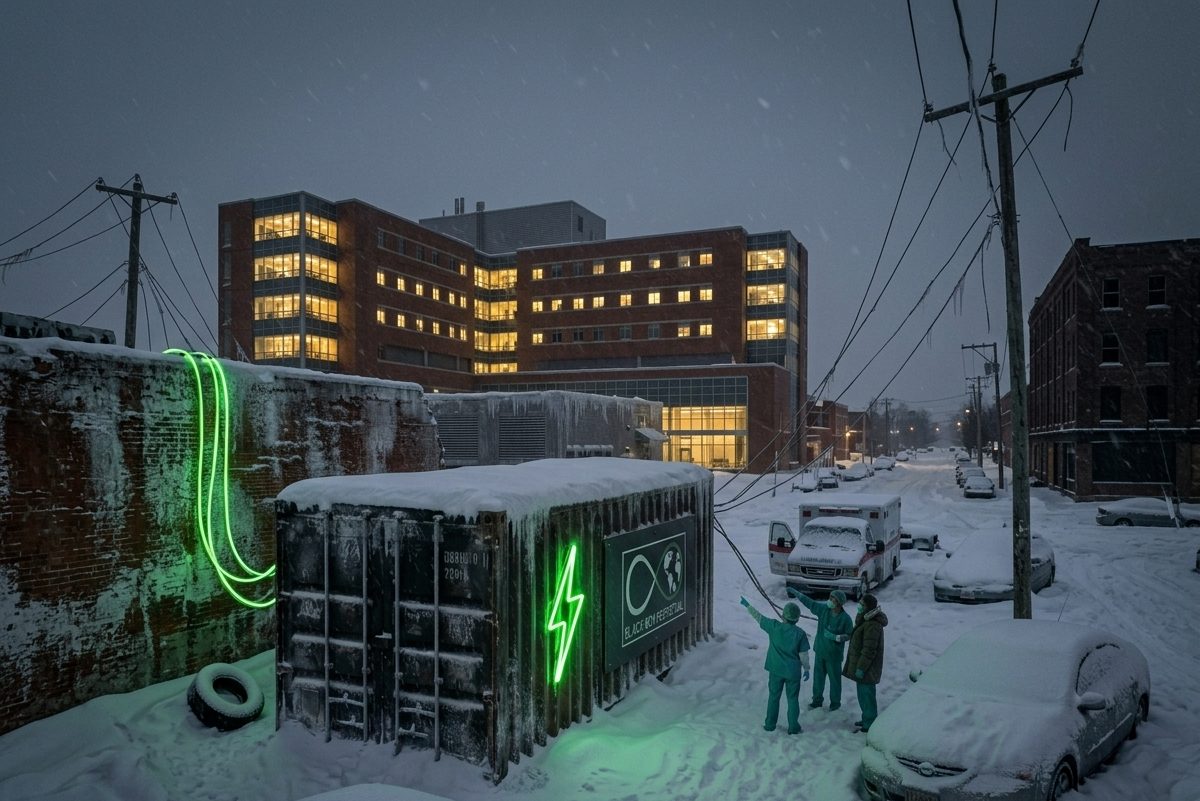
The Black Box Perpetual Alternative: Clean Power Without the Nuclear Gamble
Given nuclear’s track record of cost overruns, decades-long construction timelines, permanent waste management obligations, and the transfer of enormous financial risk to ratepayers, large enterprises are right to question whether nuclear-backed electricity is truly a sound long-term energy strategy.