
Geothermal energy, often celebrated as a constant and clean power source, is burdened by some of the highest upfront capital costs in the energy sector, severe geographic limitations, dangerous seismic risks, and multi-decade development timelines — challenges that make it an impractical solution for most of the world, and that underscore why innovations like Black Box Perpetual represent a superior path to continuous, affordable clean energy.
 When policymakers and energy advocates discuss the cleanest and most reliable baseload renewable energy sources, geothermal frequently tops the list. It runs 24 hours a day, 7 days a week, requires no fuel, and produces minimal emissions. Sounds perfect. But dig beneath the surface — literally — and a far more sobering reality emerges. Geothermal energy development is brutally expensive, geographically restricted to a narrow band of the Earth’s surface, prone to catastrophic project failures, capable of triggering earthquakes, and economically uncompetitive without massive government subsidies. Understanding these constraints is essential for any honest assessment of what it will truly take to power a modern civilization on clean energy.
The Enormous Cost of Drilling Into the Earth
The dominant cost in any geothermal project is drilling — and it is punishing. Capital costs for geothermal power plants typically range from $4,000 to $6,000 per kilowatt of installed capacity, compared to $1,400–$1,700 per kilowatt for utility-scale solar and wind. Drilling operations alone account for roughly half of total project costs, and geothermal wells operate in conditions far more demanding than conventional oil and gas drilling — extreme temperatures, high pressures, and corrosive fluids that destroy standard equipment at accelerated rates.
A full utility-scale geothermal project requires a staggering sequence of financial commitments:
-
Exploration phase: $2–5 million for geological surveys, permitting, and initial drilling
-
Confirmation drilling: $5–15 million for resource verification and reservoir assessment
-
Development drilling: $15–30 million for production and injection well fields
-
Power plant construction: $3,000–6,000 per kilowatt of installed capacity
That means the total capital outlay for a utility-scale geothermal plant — before a single megawatt-hour of electricity reaches the grid — can easily exceed $50 to $100 million. And that doesn’t account for the significant probability that the resource, once drilled, may not perform as expected. If the underground resource proves insufficient in temperature or flow, the substantial drilling investment is simply lost — a sunk cost with no recovery mechanism.
Must See Also: Geothermal Energy: Complete Renewable Energy Guide 2025
The LCOE Problem: Geothermal Is Rarely Competitive
The Levelized Cost of Energy (LCOE) — the standard metric for comparing electricity generation costs across technologies — does not favor conventional geothermal. Current unsubsidized LCOE for new geothermal plants runs $61–$102 per MWh in 2025, compared to $35–$65 per MWh for onshore wind and $40–$75 per MWh for utility-scale solar. Next-generation enhanced geothermal systems (EGS), which use hydraulic fracturing techniques to access heat from impermeable rock, are significantly more expensive still — the National Laboratory of the Rockies estimates that current EGS projects have an LCOE of approximately $140 per MWh.
The IEA’s own analysis of first-of-a-kind enhanced geothermal projects places the LCOE at $230 per MWh, with optimistic projections of reaching $50 per MWh by 2035 only if aggressive innovation occurs and costs fall dramatically. Even the DOE’s ambitious roadmap for next-generation geothermal, published in 2024, begins from an estimated overnight capital cost of $14,700 per kilowatt-hour in 2023, and targets a reduction to $4,700 per kilowatt-hour by 2030 — a 68% cost reduction that has never been demonstrated at scale in the history of the technology.
Must See Also: The Conservative Case for Next Generation Geothermal Energy
Geographic Restrictions: Most of the World Doesn’t Qualify
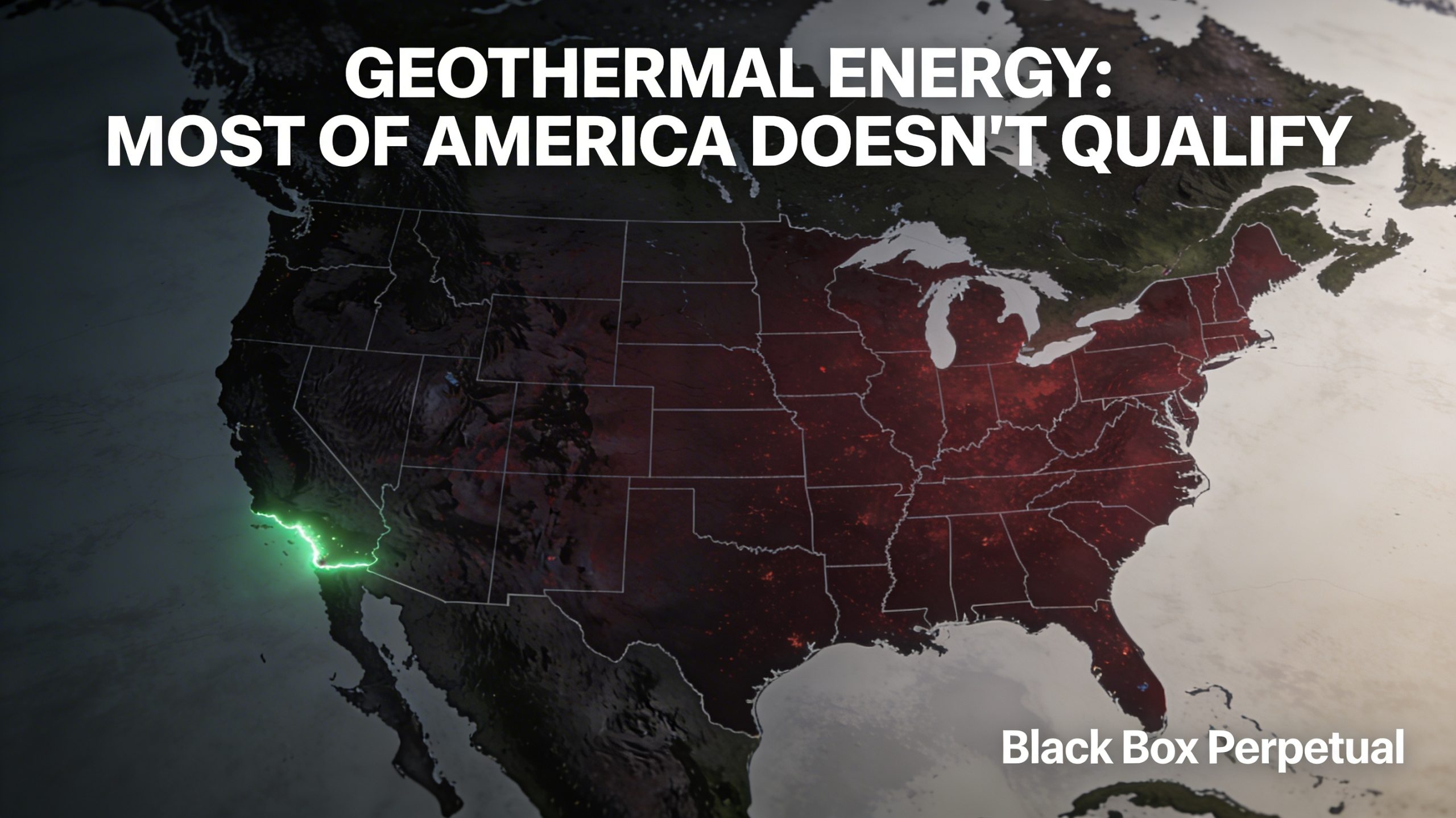
Perhaps the most fundamental limitation of geothermal energy is that it only works in specific places. High-temperature geothermal reservoirs suitable for electricity generation are concentrated primarily along tectonic plate boundaries and volcanic regions — which correspond to only a small fraction of the Earth’s landmass. In the United States, viable geothermal resources for power generation exist mainly in California, Nevada, Utah, Hawaii, Idaho, Oregon, and Alaska.
For the vast majority of the continental United States — including the entire Midwest, Southeast, and most of the East Coast — conventional geothermal power is simply not an option. The geographic constraint is not merely a technical inconvenience; it is a fundamental barrier that renders geothermal irrelevant as a national energy strategy without a revolutionary breakthrough in deep drilling technology. Unlike solar panels, which work effectively across most of the United States, geothermal development is locked to specific geological zones that happen to coincide, in many cases, with earthquake-prone and volcanically active regions.
Must See Also: Geothermal Energy Has Great Potential, But There Are Challenges – ABN AMRO
The Earthquake Problem: Geothermal Can Literally Shake the Ground
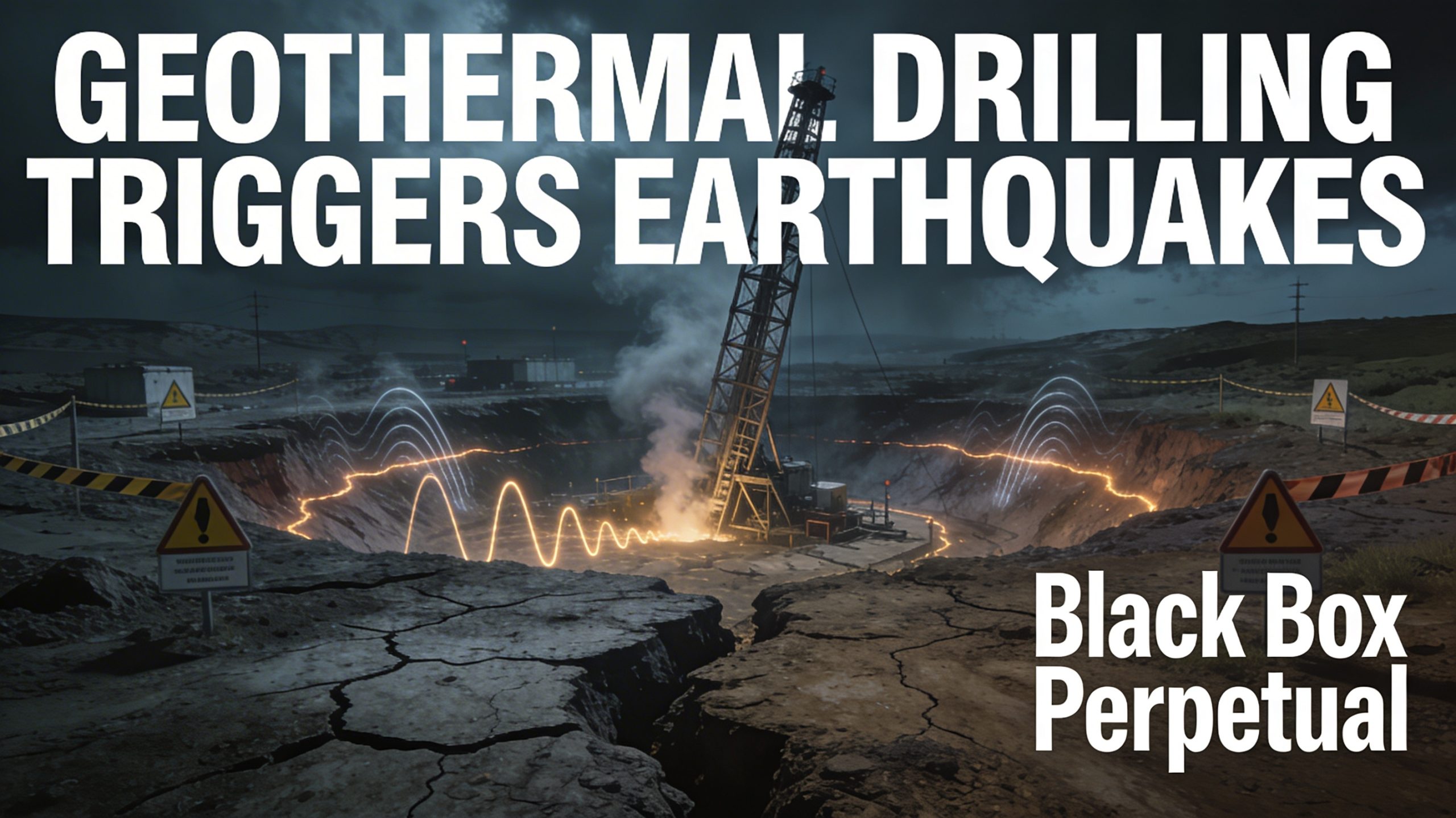
Enhanced geothermal systems, which represent the technology’s best hope for geographic expansion, carry a deeply troubling risk: induced seismicity. In November 2017, a magnitude 5.5 earthquake shook Pohang, South Korea, injuring dozens and forcing more than 1,700 residents into emergency housing — and research has overwhelmingly concluded that development of a nearby geothermal energy project caused the quake. Stanford geophysicist William Ellsworth stated unequivocally: “There is no doubt. Usually we don’t say that in science, but in this case, the evidence is overwhelming.”
The Pohang earthquake remains the largest ever directly linked to an enhanced geothermal system, but it is not unique. The process of injecting high-pressure fluid to fracture underground rock — the core mechanism of EGS — has been understood for half a century to trigger seismic events. This risk creates both technical and public acceptance challenges that developers must manage at every new project site, adding additional cost, legal exposure, and community opposition to an already expensive undertaking.
Must See Also: Solving Geothermal Energy’s Earthquake Problem – Stanford Report
Long Development Timelines and Financing Barriers
Even when geothermal projects do find viable resources and navigate seismic concerns, they face timelines that would test the patience of any investor. The development journey from exploration to commercial operation typically spans 5 to 10 years — with substantial financial outlays throughout, and no guarantee of success until well into the process. During the critical confirmation drilling phase, when millions of dollars have already been spent, projects often cannot secure traditional debt financing because the resource risk remains too high, yet the capital requirements are too large for most equity investors to absorb alone.
The high upfront capital requirements, exploration and drilling risks, and long development timelines create primary financing barriers that have stifled geothermal development worldwide, despite the technology’s theoretical advantages. Government subsidies, insurance programs, and risk-sharing mechanisms are required just to get projects off the ground — and even then, to make geothermal economically feasible requires substantially higher carbon pricing or fossil fuel costs than currently exist in most markets.
Must See Also: Geothermal Drilling Costs and Challenges – GeoComNardo
The Promise vs. Reality Gap
Geothermal advocates have long pointed to the technology’s extraordinary potential. The DOE has estimated that enhanced geothermal systems could contribute up to a fifth of total U.S. electricity generation by 2050. But “potential” and “practical deployment” are separated by the brutal economics described above. The combination of large upfront capital requirements and the perceived risks of new technology can deter investors, especially when questions remain about cost recovery and long-term returns — and the history of geothermal development is littered with projects that were overpromised, underdelivered, or simply abandoned.
Even in the Netherlands — a country with significant geothermal ambitions and government support — the national target of 80 petajoules of annual geothermal production by 2050 is now considered difficult to achieve, according to TNO analysis. Bottlenecks including grid congestion, the required pace of new well drilling, and structural geological limitations all conspire against meeting even modest national targets.
Must See Also: An Introduction to Superhot Rock Geothermal – Clean Air Task Force
Enter Black Box Perpetual: Always-On, Without the Risk
The challenges of geothermal energy — staggering upfront drilling costs, geographic exclusivity, seismic risk, decade-long development timelines, and financing barriers — underscore the urgent need for an alternative approach to continuous clean energy generation. Black Box Perpetual (BBP) was built to answer exactly that need.
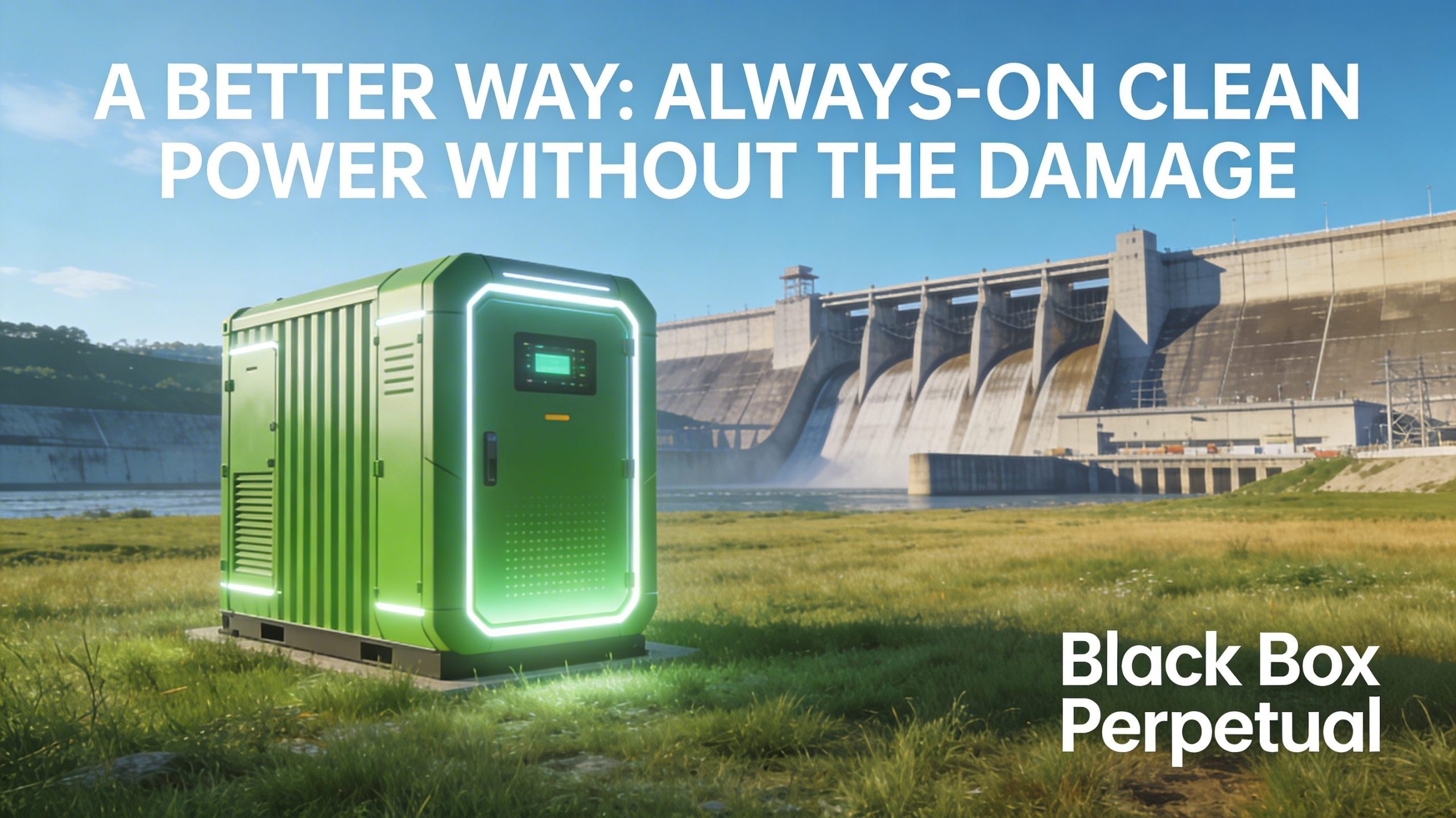
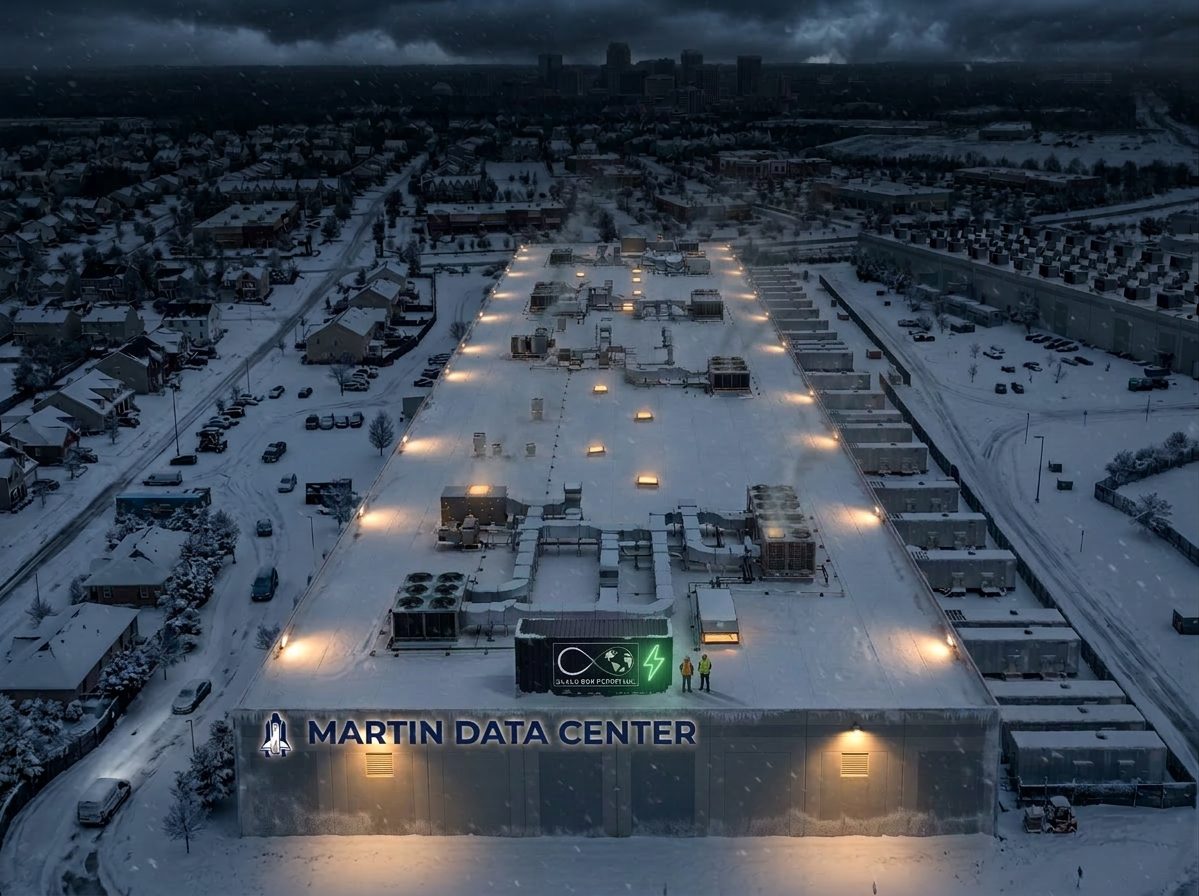
BBP’s system delivers continuous, clean energy generation in a containerized 1MW unit that fits inside a standard 20-foot shipping container. There are no wells to drill, no seismic risks to manage, no geological surveys required, and no five-to-ten-year development timelines to endure. The system can be deployed at any enterprise location in the United States — not just the handful of states that sit atop favorable geological formations.
Selected pilot program partners receive the system, install it at their site, and use the generated power for free for six months. Those who wish to continue can enter a 25-year power purchase agreement for a 10MW+ system at pricing that is significantly reduced compared to current energy costs, with full-rate production deliveries beginning as early as June 2027. While the geothermal industry continues to struggle with LCOE figures of $61–$230 per MWh and development timelines that stretch across a decade, BBP is already qualifying customers and establishing delivery schedules.
The Earth’s heat is real, and the promise of geothermal energy is genuinely appealing. But the cost, the risk, the limitations, and the timelines are equally real — and for most enterprises that need reliable, affordable, clean power now, the promise of geothermal is simply too expensive, too restricted, and too risky to count on. Black Box Perpetual offers a better path.