
AI data center backup power has become one of the most pressing and underexamined cost centers in modern infrastructure. As artificial intelligence drives an unprecedented surge in electricity demand, the backup power systems designed to keep these facilities online are simultaneously becoming more expensive, more environmentally destructive, and more technically complex—while still failing at critical moments. This article examines the full scope of the AI data center backup power crisis and introduces a breakthrough alternative that could redefine the economics of always-on power.
The AI Data Center Backup Power Demand Explosion
The scale of the energy challenge is almost incomprehensible. According to the International Energy Agency (IEA), global electricity consumption from data centers was approximately 415 TWh in 2024—roughly 1.5% of all global electricity—and is projected to more than double to 945 TWh by 2030, an amount equivalent to Japan’s entire annual electricity consumption. AI is the primary driver.
Traditional CPU servers consume 300–500 watts per server, but GPU-accelerated servers used for AI workloads demand 3,000–5,000+ watts, and AI training clusters can exceed 10,000 watts per server. This tenfold or greater leap in power density means that every megawatt of compute capacity now requires dramatically more robust, expensive, and complex backup infrastructure. McKinsey estimates that meeting global data center demand will require nearly $7 trillion in capital investment by 2030, with AI being the primary driver.
In the United States alone, data centers are expected to account for up to 12% of total electricity use by 2030, up from around 3% in 2022. A single hyperscale AI data center can consume as much power as 100,000 households. The U.S. Energy Information Administration’s January 2026 outlook highlighted the “strongest four-year growth in U.S. electricity demand since 2000,” driven primarily by data centers. For AI data center operators, the backup power equation grows more complicated and costly by the day.
Must See Also: AI Data Center Power: The Coming Energy Crisis and What It Means
Why AI Data Center Backup Power Cannot Fail — and Often Does
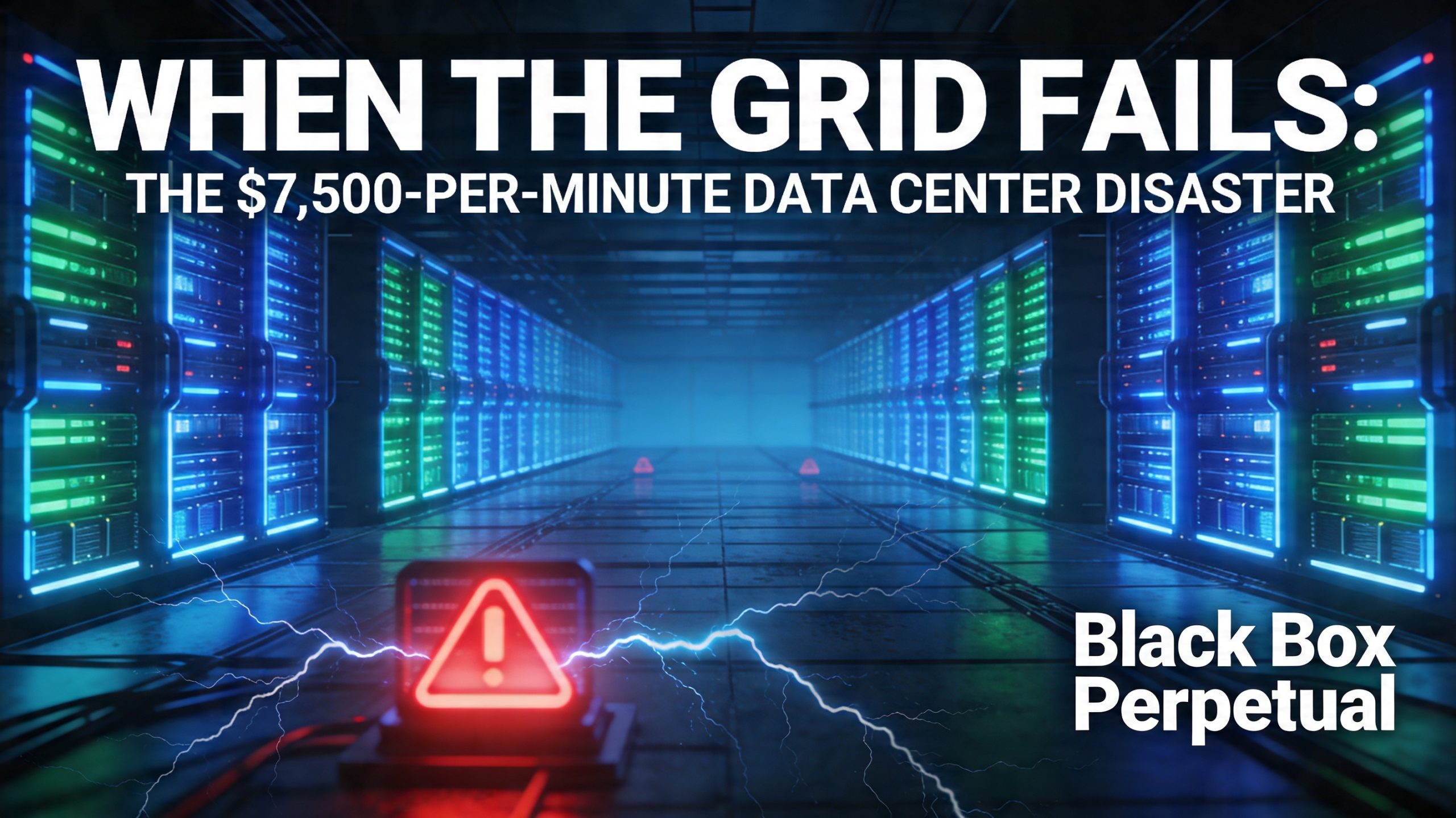
The data center industry lives by a concept called “five nines” — 99.999% uptime, translating to no more than about five minutes of downtime per year. Every minute of downtime is extraordinarily expensive: average data center downtime costs exceed $7,500 per minute, and more than half of operators surveyed by the Uptime Institute reported that their most recent severe outage cost over $100,000, with nearly one in five facing losses exceeding $1 million.
Despite investment in backup systems, power remains the leading cause of impactful data center outages, accounting for 45% of incidents in 2025, most often from UPS (Uninterruptible Power Supply) issues. In July 2024, a voltage fluctuation in northern Virginia triggered the simultaneous disconnection of 60 data centers, prompting a 1,500-megawatt power surplus that forced emergency grid adjustments to prevent cascading outages. Regulators at the Federal Energy Regulatory Commission have warned that risks “continue to mount,” with a rising number of small-scale outages and near-misses.
The failures are not always dramatic grid collapses. Technical case studies reveal how a single loose screw initiating an unintended generator load test can cascade through UPS systems and cause facility-wide de-energization. Generator frequency fluctuations during routine power transfer tests have caused UPS system failures at large data centers, leading to service disruptions and financial losses across clients in e-commerce, financial services, and government. Generators must operate with leading reactive current of less than 20% of max rated current to avoid instability — a threshold that becomes harder to maintain as AI-era power loads grow denser and more variable.
Must See Also: The Hidden Dangers of Data Center Power Failure
The Staggering Cost of AI Data Center Backup Power Infrastructure
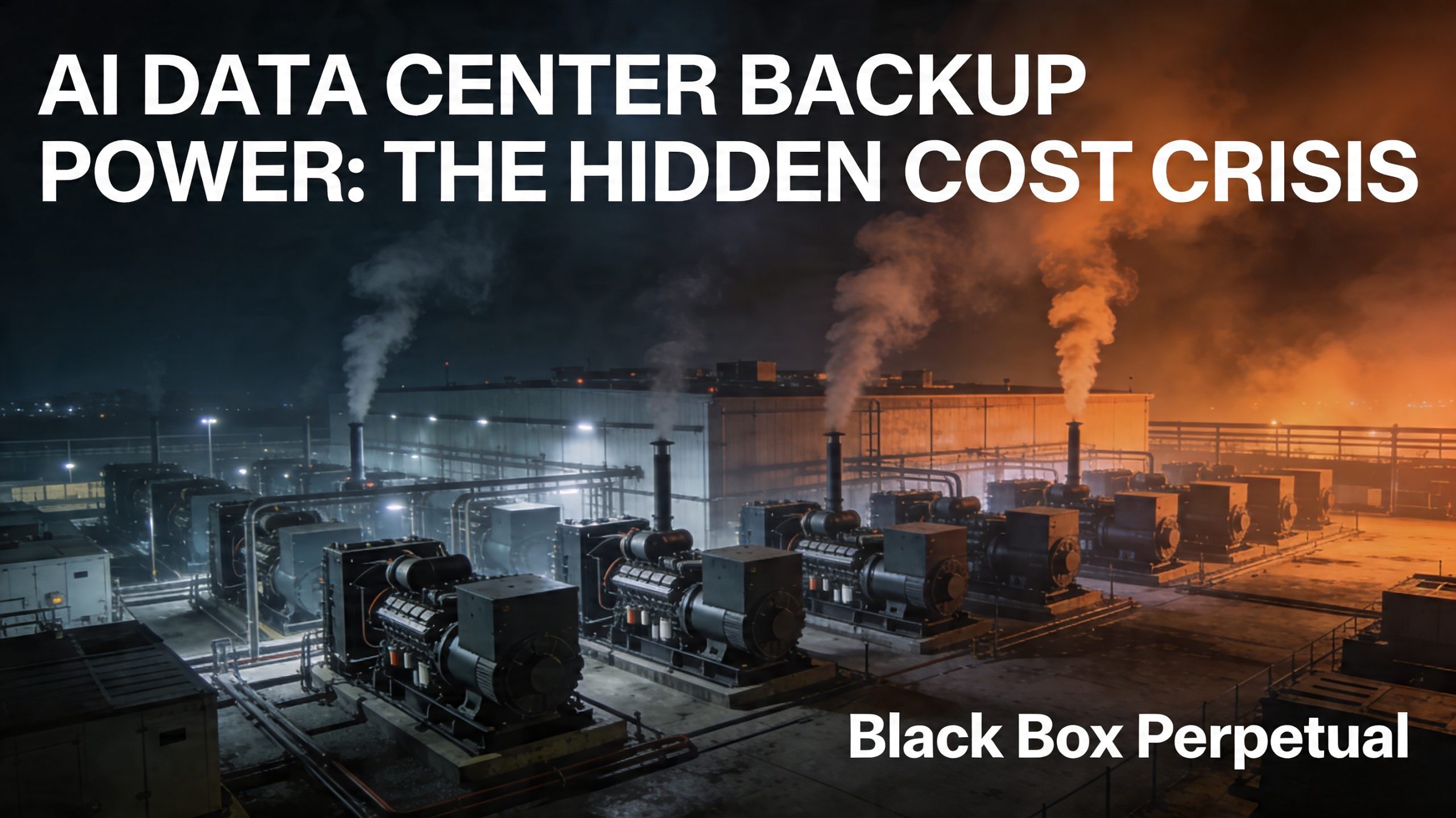
AI data center backup power infrastructure represents one of the largest and fastest-growing cost categories in facility construction. Electrical systems — including backup generators, UPS units, and power distribution infrastructure — account for 40%–45% of data center improvement costs, with electrical system improvements costing $280–$460 per gross square foot. For standard data centers, total capital expenditure runs approximately $10 million per megawatt; AI-focused facilities frequently exceed $20 million per megawatt.
Backup generators alone are a significant line item. A generator producing 1 MW of power costs approximately $100,000, and since data centers consume dozens of megawatts, sufficient generator capacity quickly becomes cost-prohibitive at scale. For a 500 kW–1 MW generator, prices range from $100,000–$300,000; a 1 MW–2 MW unit runs $300,000–$600,000. And these are only capital costs. NREL estimates total capital costs for backup power systems at $800–$1,100 per kW. Multiply that across the 100+ GW of global data center capacity approaching buildout, and backup power infrastructure alone represents hundreds of billions of dollars in capital spending.
Beyond construction, grid capacity costs have exploded. In the PJM Interconnection region covering the mid-Atlantic and Midwest, capacity auction prices jumped 9.3x from $29/MW-day in 2024–25 to $270–$329/MW-day for 2025–27 delivery years, hitting regulatory price caps. The 2026–27 auction translates to approximately $16 billion in total capacity payments, or roughly $120,000 per MW. These costs flow directly through to data center operators’ energy contracts and backup capacity obligations—and ultimately to consumers, with analysts predicting average electricity bills could rise 10–20% for the 65 million residents served by PJM.
Must See Also: The True Cost of Data Center Energy Infrastructure
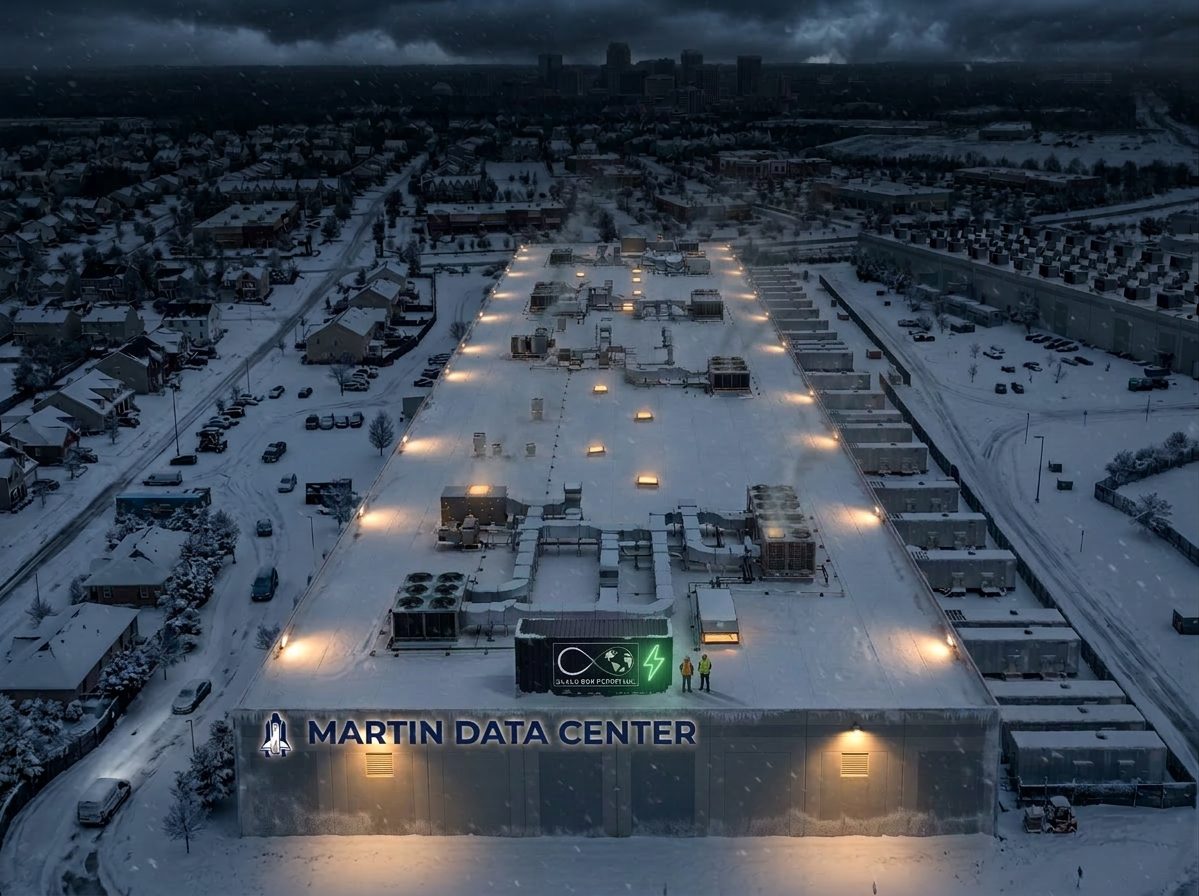
Diesel Generators: The Dirty Secret of AI Data Center Backup Power
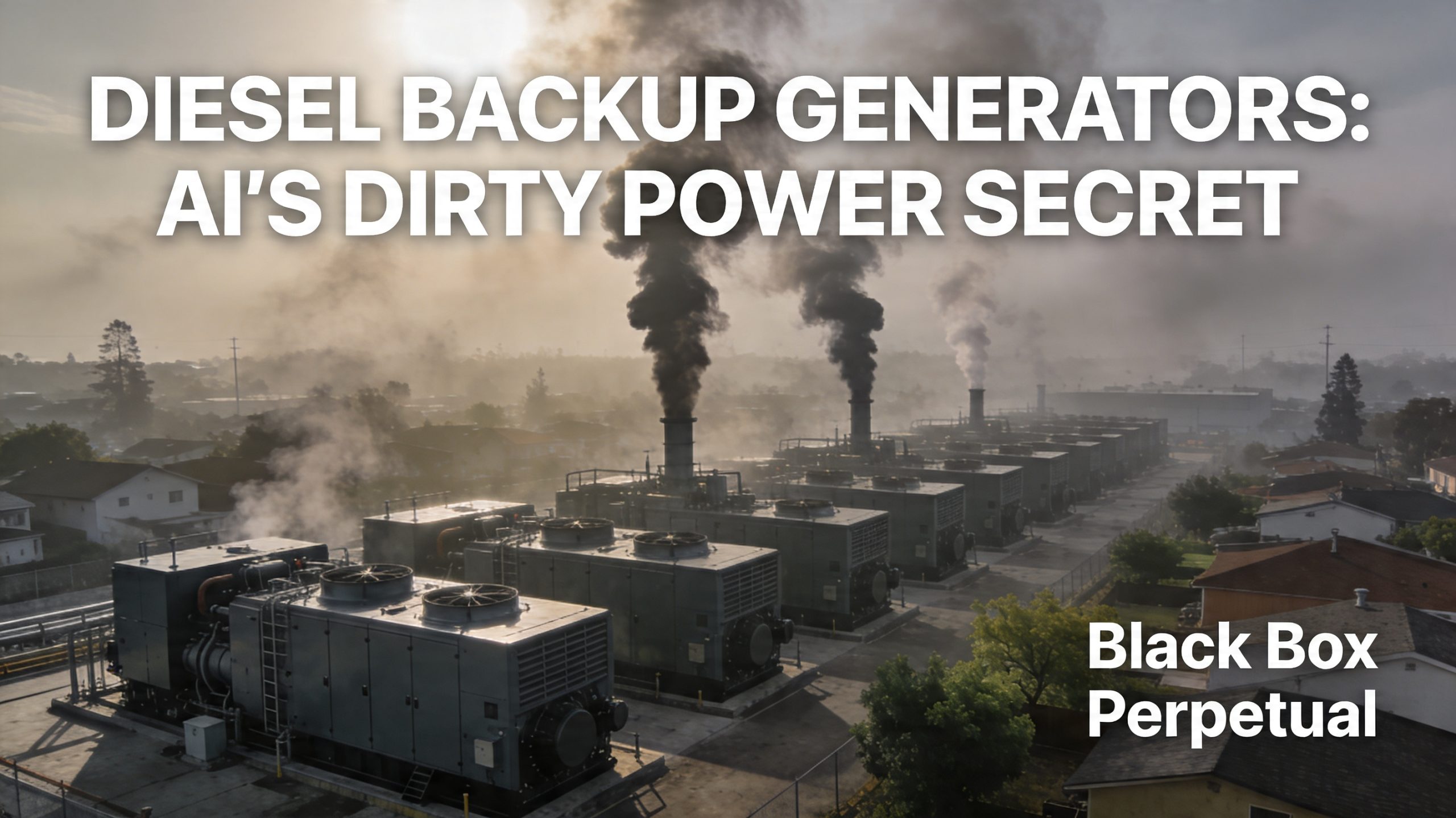
The workhorse of AI data center backup power is the diesel generator. Data center operators favor diesel because it can be stored on-site, provides high energy density, and can keep a facility running for up to 96 hours using on-site fuel reserves with no reliance on pipelines. Virginia alone is home to approximately 10,000 backup generators today, with experts warning that no other place in the world is “anticipating the number of diesel generators that Virginia is.”
The environmental consequences are severe and increasingly documented. Diesel generators produce carbon monoxide, nitrogen oxides (NOₓ), and fine particulate matter, with emissions levels in Northern Virginia communities already comparable to living next to a natural gas power plant. In Texas, which is home to a fast-growing cluster of AI data centers, backup generators are permitted as long as they run less than 10% of annual operations — but there are no federal time limits on diesel generator use during emergencies, and operators only self-report emissions to regulators. Federal rules limit non-emergency testing to just 100 hours per year.
The problem is compounding. As grid operators like Texas’s ERCOT gain authority to disconnect large data center loads during peak demand periods, backup generators will run more frequently — not just in emergencies, but as a routine operational backup against forced grid disconnection. With some data center projects consuming as much electric power as small cities, there is growing concern among energy analysts that self-reported diesel emissions will exceed Clean Air Act limits. Microsoft’s emissions grew by nearly 25% from fiscal years 2020 to 2024 even as the company pursues carbon-negative commitments, illustrating the fundamental tension between AI-era power demands and environmental responsibility.
Must See Also: Why Diesel Generators Are Failing the AI Data Center Industry
UPS Systems: The First Line of AI Data Center Backup Power — and Its Limits
Uninterruptible Power Supply (UPS) systems form the critical first layer of AI data center backup power, designed to bridge the gap between grid failure and generator startup. When grid power fails, a UPS detects the outage within milliseconds and activates its batteries, buying time for generators — ranging from 12 to 84 diesel units at large facilities — to start up. However, UPS battery life is typically limited to only 5–10 minutes, making them insufficient for extended outages and entirely dependent on rapid, successful generator startup.
Traditional low-voltage UPS topologies are increasingly inadequate for AI-era data centers. They introduce avoidable conversion losses, limit scalability, and complicate compliance with stringent global grid-integration standards. ABB and other major power infrastructure firms now advocate for next-generation medium-voltage (MV) UPS architectures that integrate battery energy storage systems (BESS), intelligent switchgear, and advanced microgrid controls. Even so, these systems are expensive, technically complex, and still fundamentally reactive — they respond to power problems rather than eliminating them.
The surge in AI power demand is straining existing infrastructure designs “especially around power and cooling,” according to Uptime Institute research. AI servers require massive, sustained power loads and generate enormous heat, pushing cooling and electrical distribution infrastructure to continuous extremes. In this environment, even marginal UPS system vulnerabilities — a misread breaker status, a frequency calibration error, a reactive load imbalance — can cascade into facility-wide outages with million-dollar consequences.
Must See Also: UPS Systems Are Not Enough: The AI Data Center Power Problem
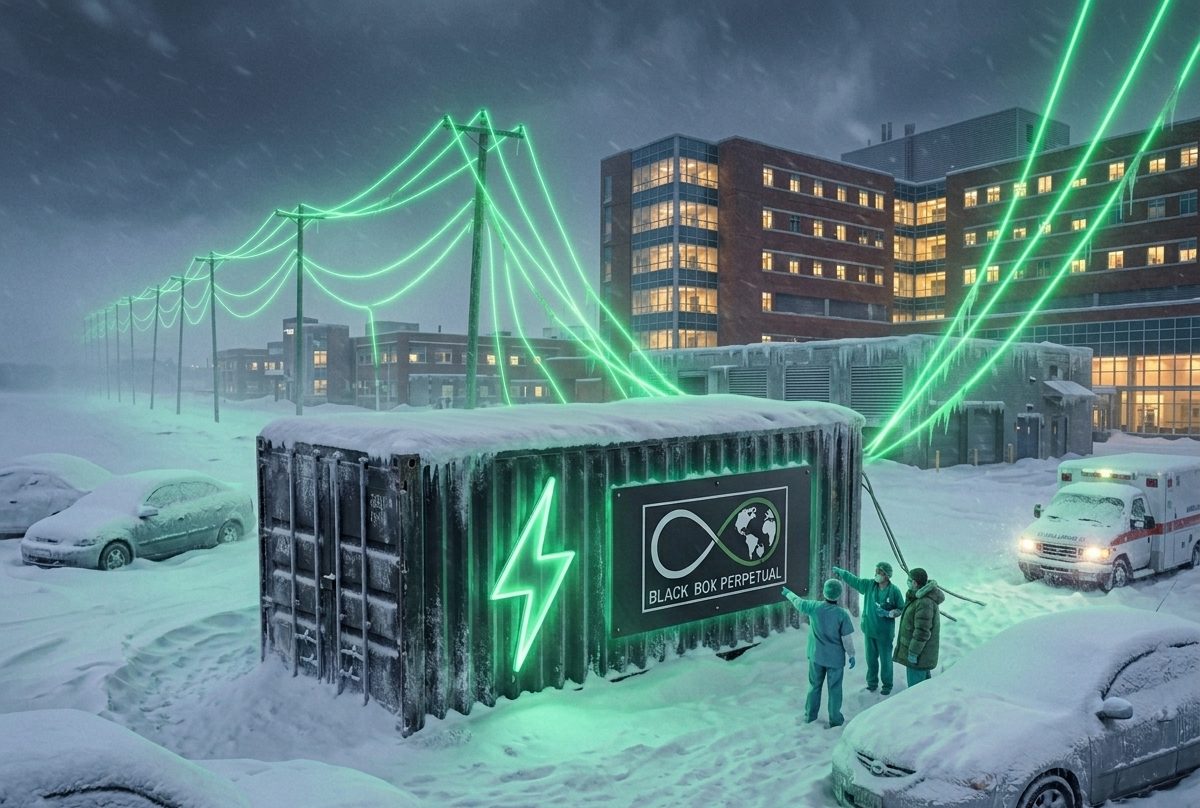
Grid Instability: The External Threat Multiplying AI Data Center Backup Power Costs
The electrical grid itself is increasingly a source of risk rather than reliability for AI data center backup power planning. The rapid proliferation of AI data centers is straining regional grid infrastructure faster than new capacity can be built. Utilities’ capital expenditures are rising, with year-over-year increases jumping from 13% in 2023–24 to 23% in 2025, driven by a combination of data center load growth, aging infrastructure replacement, and grid hardening against extreme weather.
Gas turbine prices have risen almost 200% since 2019, directly inflating the cost of backup capacity that data centers must maintain or procure. The growing integration of variable renewable energy — while environmentally necessary — further complicates grid stability, as solar and wind generation cannot be dispatched on demand, requiring more backup “peaker plants” that run on gas at volatile prices. Regulators and utilities are increasingly pushing back: more than 40 states have enacted or are considering data center-related legislation, and the Trump administration is seeking voluntary commitments from tech companies to pay 100% of new power generation costs required by their facilities.
When hyperscale data centers using similar protection and transfer schemes respond simultaneously to a grid disturbance, their collective backup power activation can itself create grid-level effects — a feedback loop that threatens broader grid stability. The industry faces an uncomfortable paradox: the backup power systems designed to protect against grid failures are, at scale, becoming a source of grid instability themselves.
Must See Also: How AI Data Centers Are Destabilizing the Power Grid
A Paradigm Shift: The Black Box Perpetual Solution for AI Data Center Backup Power
Every challenge described above — the enormous capital cost, the diesel emissions, the UPS fragility, the grid dependency, the regulatory exposure — stems from a single underlying assumption: that AI data center backup power must be reactive. The industry has spent decades building elaborate systems to respond to power failure rather than prevent it.
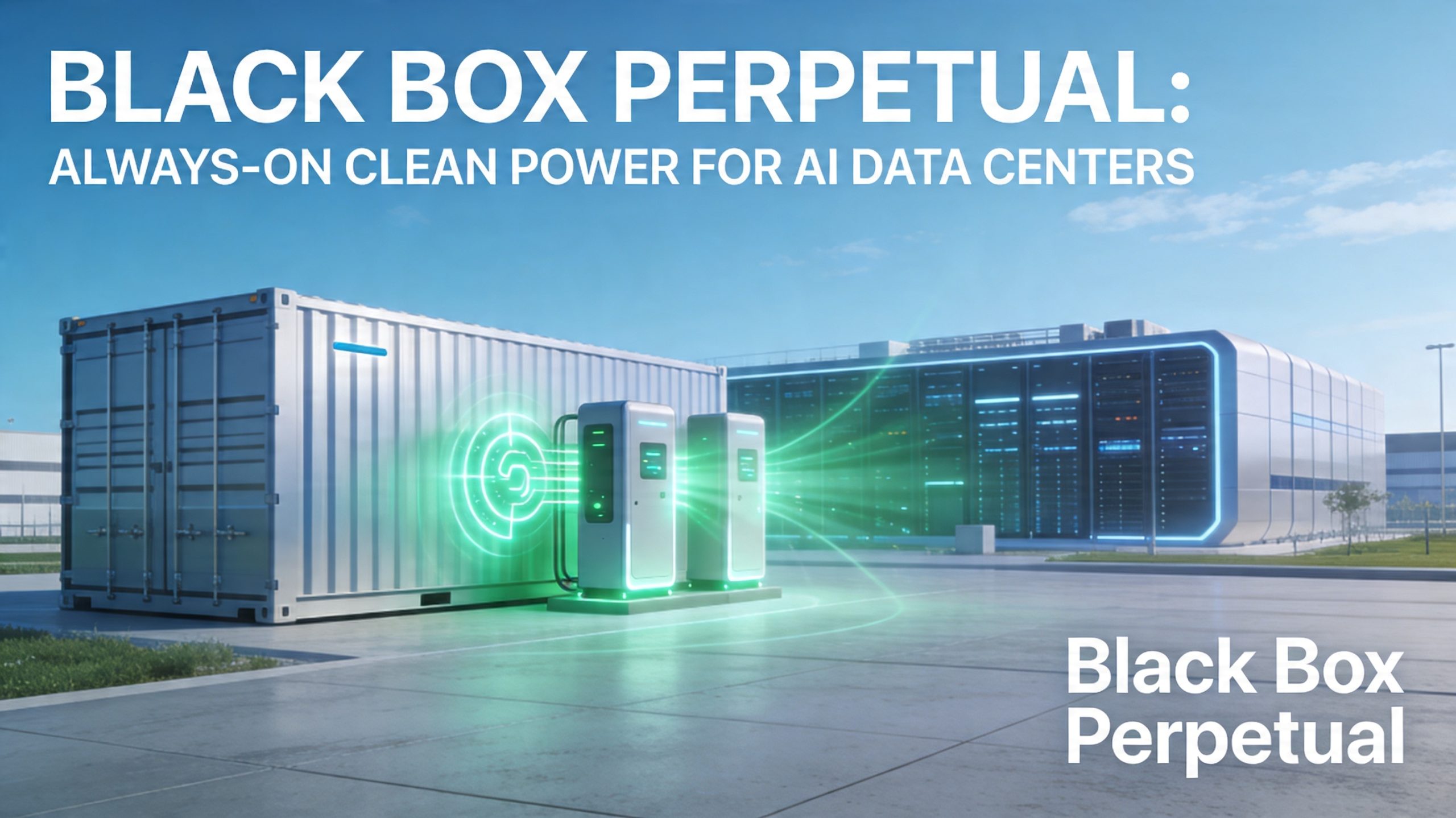
Black Box Perpetual (BBP) challenges that assumption entirely. BBP offers always-on green power generation for large enterprises, delivering continuous, clean energy through containerized systems starting at 1 MW, scalable to multi-gigawatt deployment. Rather than functioning as backup infrastructure that sits idle waiting for grid failure, BBP systems operate as the primary power source — eliminating grid dependency, diesel emissions, UPS bridging gaps, and the cascading failure risks that plague conventional backup architectures.
The BBP system is containerized in a standard 20-foot unit, making it deployable on-site or behind the meter without the massive civil engineering footprint of traditional generator farms. For data centers facing land constraints, permitting delays, and supply chain bottlenecks on gas turbine installations, this form factor is a fundamental operational advantage. Full deployment can scale to multi-gigawatt capacity, making it viable for the largest hyperscale AI campuses.
The BBP Pilot Program: Risk-Free Evaluation
Black Box Perpetual is currently evaluating partners for a pilot program that offers an extraordinary value proposition: selected partners receive and install a 1 MW BBP system at their site and use the generated power for free for six months. After the trial period, partners may return the unit or enter into a 25-year power purchase agreement for a 10 MW+ system at greatly reduced pricing compared to current energy costs.
This structure directly addresses the data center industry’s most pressing financial challenge. With construction costs running $10–$20+ million per MW, backup power accounting for a significant share of electrical system CapEx, and grid capacity prices reaching $329/MW-day, locking in 25 years of greatly reduced, always-on clean power pricing represents a transformative cost advantage. Full-rate production begins in approximately June 2027, with earliest contract effective dates of May 1, 2027 and earliest install start dates of June 1, 2027.
Must See Also: Black Box Perpetual: The Future of AI Data Center Power
Why Always-On Power Changes the AI Data Center Backup Power Equation
The conventional AI data center backup power architecture is fundamentally a cost-escalation trap. Every element — UPS batteries, diesel generators, fuel storage, testing and maintenance programs, emissions compliance, grid capacity contracts — is an ongoing expense that provides zero productive output until a failure occurs. For most facilities, this backup infrastructure sits idle 99%+ of the time, consuming capital and generating regulatory risk.
The Black Box Perpetual model inverts this economics. By delivering continuous, clean, always-on power generation, BBP eliminates the need for diesel generator banks, reduces UPS cycling stress, and removes grid dependency from the backup power equation altogether. The 25-year power purchase agreement converts what was a capital-intensive, operationally complex backup infrastructure into a predictable operational expense with locked-in pricing — precisely what CFOs and infrastructure planners need as grid capacity costs continue their upward spiral.
For AI data center operators facing $7 trillion in required investment by 2030, mounting regulatory scrutiny over emissions and grid impact, and backup power failures that continue to cause million-dollar outages, the case for rethinking the entire backup power paradigm has never been stronger. The era of reactive backup infrastructure — the diesel generator, the battery UPS, the grid-dependent transfer switch — may be approaching its end. Always-on green power generation, as pioneered by Black Box Perpetual, represents the logical successor.
Must See Also: The Case for Eliminating Backup Power Dependency in AI Data Centers
Conclusion: Rethinking AI Data Center Backup Power from the Ground Up
AI data center backup power is no longer a secondary engineering consideration — it is a multi-billion-dollar strategic challenge that sits at the intersection of operational reliability, environmental responsibility, regulatory compliance, and financial sustainability. The IEA’s projection of 945 TWh in annual data center electricity consumption by 2030 means that every inefficiency, every failure mode, and every cost escalation in backup power infrastructure will be amplified at massive scale.
The traditional answer — more diesel generators, larger UPS banks, more redundant transfer switches — is increasingly untenable. It is expensive to build, expensive to operate, environmentally damaging, and still fails at critical moments. Energy analysts, environmental experts, regulators, and now data center operators themselves are recognizing that reactive backup power is a liability masquerading as a solution.
Black Box Perpetual offers a different path: continuous, clean, containerized power generation that makes backup power infrastructure largely unnecessary by ensuring the primary power never fails. For AI data centers that cannot afford downtime, cannot afford escalating grid costs, and cannot afford the reputational damage of diesel emissions violations, BBP’s always-on green power model is not just an alternative — it may be the only approach that scales sustainably into the AI-powered future.
To learn more about Black Box Perpetual’s pilot program and 25-year power purchase agreement, visit blackboxperpetual.com.