AI data centers are driving a historic surge in electricity demand, and onsite green energy will be a crucial piece—but not a complete solution on its own. Operators are already siting facilities in regions rich in renewables like Iceland, Texas, and the U.S. Pacific Northwest to tap abundant hydro, wind, and solar resources. Yet globally, fossil fuels still provide close to 60% of data center power while renewables cover only about 27%, underscoring the gap between ambitions and current reality.
Must See Also: Renewable Energy for AI Data Centers: A Complete Guide
AI Data Center Green Energy Needs
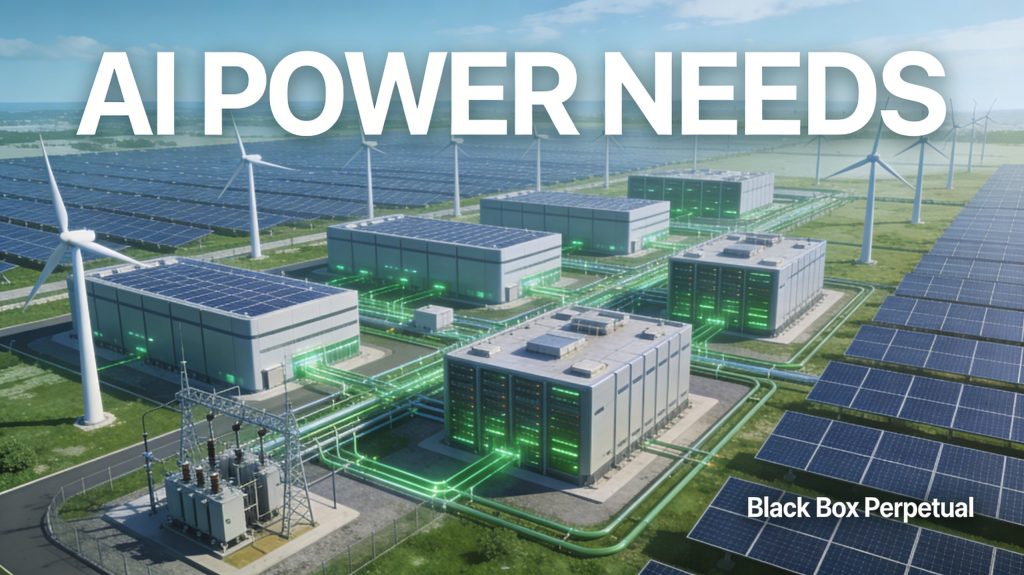
AI Data Center Green Energy Needs are becoming a defining constraint on where and how the next generation of AI infrastructure can be built. As AI model sizes and workloads explode, individual hyperscale facilities are pushing into the 50–100 MW range and beyond, rivaling the demand of small cities. Analysts tracking cloud and AI expansion forecast that global data center electricity consumption could roughly double over the coming decade, with AI responsible for a disproportionate share of that growth.
Must See Also: AI: Five charts that put data-centre energy use – and emissions – into context
AI Data Center Green Energy Needs: Why Power Is Overwhelming
AI data centers have overwhelming power needs because AI training and inference are far more energy intensive than traditional web hosting or enterprise workloads. Studies of GPU-based clusters show that large AI training runs can consume multiple gigawatt-hours on their own, while dense racks of accelerators can draw 30–80 kW per rack compared with 5–10 kW a decade ago. This density, multiplied across hundreds or thousands of racks, pushes total site load into a range where power availability, not just land or fiber, becomes the gating factor.
Must See Also: Renewable Energy for AI Data Centers: A Complete Guide
AI Data Center Green Energy Needs: Onsite Solar Scale and Land Use
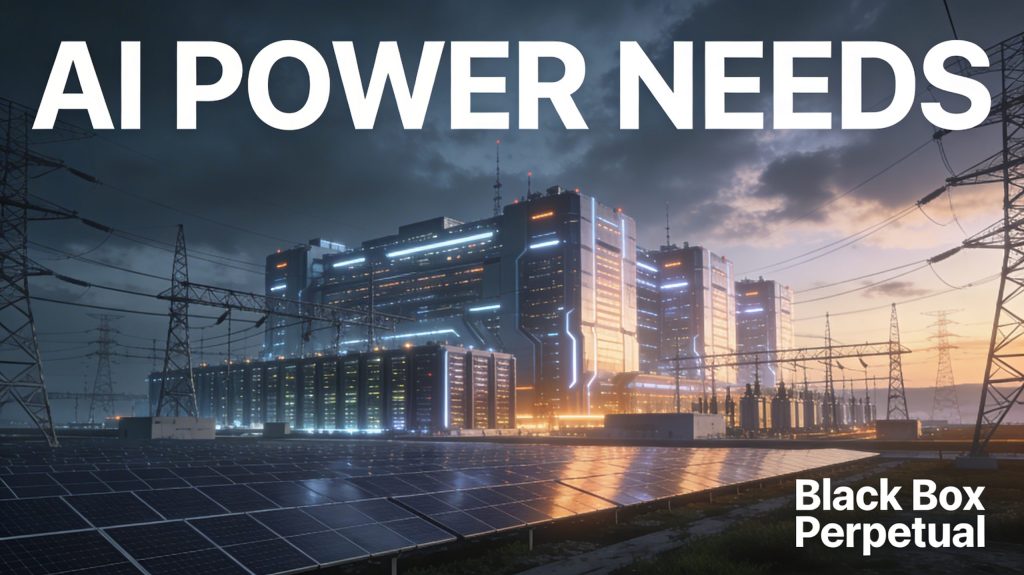
For hyperscale AI sites drawing 50–100 MW or more, rooftop solar can only offset a sliver of load because typical roof systems are sized in the hundreds of kilowatts, far below per–data-hall megawatt demand. A CBRE analysis cited by industry reports found an 800 kW rooftop system may need roughly 100,000 square feet of space and yield up to 1.6 GWh per year in high‑sun regions—enough to power only a small fraction of a modern AI campus. Ground‑mounted solar is more scalable, but due to real‑world capacity factors, experts estimate around 20–30 acres per MW of nameplate solar, meaning 200–300 acres just to support a 100 MW data center—and still not fully 24/7, firm power.
Must See Also: On-site rooftop solar at data centers: Everything you need to know
AI Data Center Green Energy Needs: Example – Meta’s True North Solar Project
Meta illustrates how “onsite” often means co‑located or regional rather than literally on the same parcel. In Texas, the 321 MW True North solar farm sits on about 1,907 acres in Falls County and is dedicated to supporting Meta’s data center operations in the state, pairing one large solar plant with multiple facilities. That’s roughly 6 acres per MW of nameplate capacity in this project, but because of intermittency, Meta still requires grid connections and other resources to ensure continuous service to its energy‑hungry AI and cloud workloads.
Must See Also: Solar opportunity as datacenter electricity demand expected to triple in five years
AI Data Center Green Energy Needs: Example – Apple’s Viborg and European Sites
Apple’s Viborg data center in Denmark is a flagship example of a hyperscale site designed to be powered entirely by wind and solar through long‑term contracts and some onsite generation. Instead of surrounding the building with vast solar fields, Apple partnered with offsite Danish wind and solar projects sized in the hundreds of megawatts, matching the facility’s annual consumption while relying on the regional grid and storage to buffer intermittency. This model highlights a key weakness of onsite green energy: true 24/7 coverage for a large AI site still requires grid-scale renewables, storage, and robust transmission beyond what can fit on the immediate campus.
Must See Also: Top 10: Data Centres Using 100% Renewable Energy
AI Data Center Green Energy Needs: Example – Regional Solar Backing for Hyperscale Growth
Industry data show the “average” U.S. data center is expected to grow from about 40 MW to around 60 MW by 2028, with newer hyperscale builds already targeting 100 MW or more—comparable to large utility‑scale solar plants. Major operators such as Amazon, Meta, Microsoft, and Google are among the leading subscribers to regional solar farms, often contracting entire projects in the hundreds of megawatts to conceptually “cover” multiple data centers in a given market. In practice, these deals function like virtual onsite energy: the solar typically sits within the same state or grid region, while the AI data centers continue to draw firm power from the grid.
Must See Also: Clean Energy Resources to Meet Data Center Electricity Demand
AI Data Center Green Energy Needs: Hybrid Onsite Solutions and Their Weaknesses
Because solar and wind only generate when conditions permit, AI campuses increasingly pursue hybrid configurations—combining onsite or adjacent renewables with grid‑scale storage, backup generators, or even nuclear and geothermal to achieve reliability. Lithium‑ion battery systems can store excess solar output during peak production hours and discharge it later, but the volume of storage needed for a 50–100 MW AI site to ride through nights or prolonged cloudy, calm periods is still enormous and expensive. As a result, onsite green energy today typically serves as a supplement or marketing proof point rather than a complete replacement for grid power, even though its role will grow as storage costs fall and more “energy campus” style developments integrate multi‑gigawatt renewable plants directly with data center clusters.
Must See Also: The Energy Sources Powering America’s AI Boom